Card Value, Price & Collection
Unlock the value of your sports cards in an instant with AI-powered identification—just snap a photo and discover their worth!


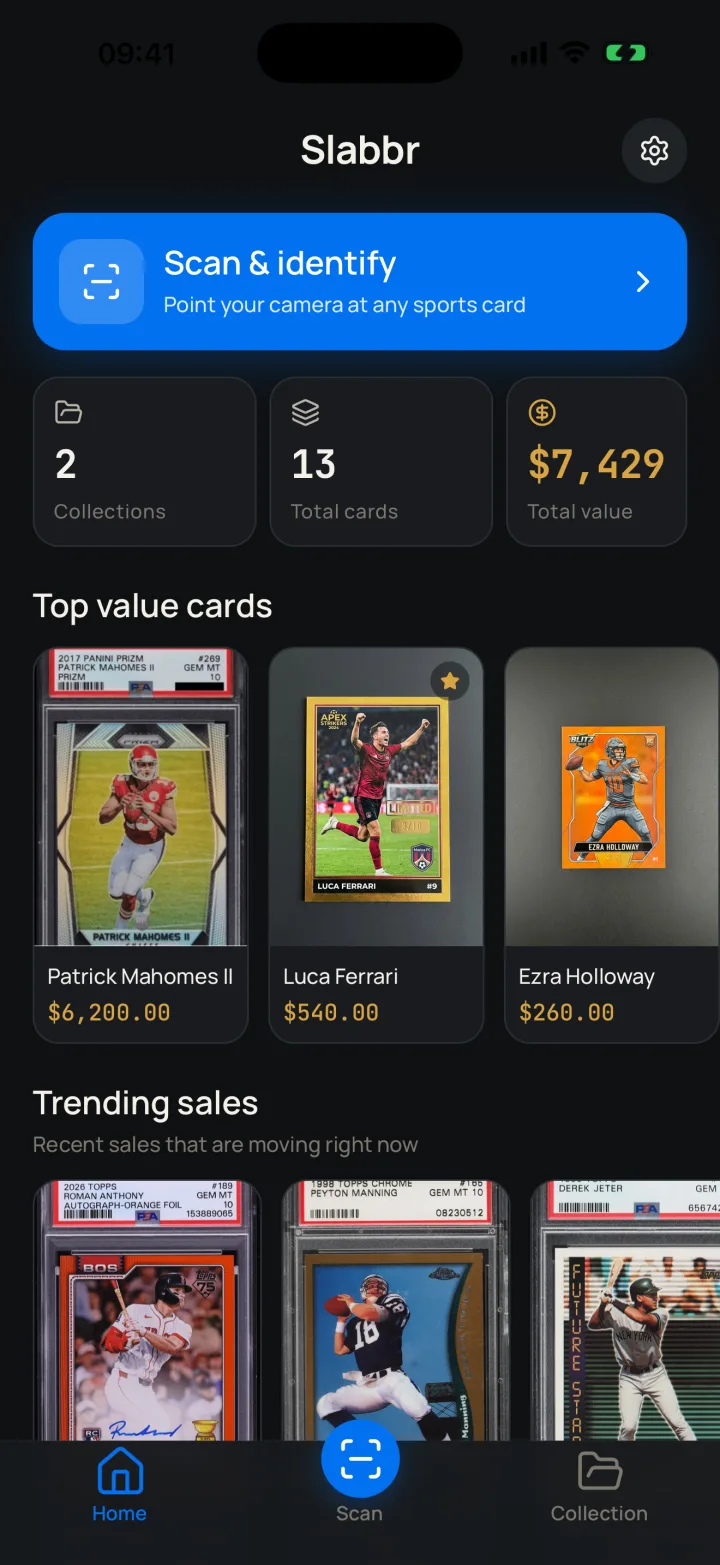
How it works
Scan or Upload Card
Point your camera or choose a photo and Slabbr identifies player, set, year, card number, parallel, team, variations and slab grade.
Calculate Market Value
Slabbr generates an estimated value range, shows recent sold listings and graded estimates, and charts price history and trend.
Save to Collections
Save cards to collections, mark favourites, refresh for price history, track portfolio value and export collections to CSV or PDF.
Everything it reads
Know what a card is worth before you sell it, buy it, or pay to have it graded. Point your camera at any sports card and Slabbr identifies the player, set, year, card number and parallel, then prices it against recent sales of that same card.
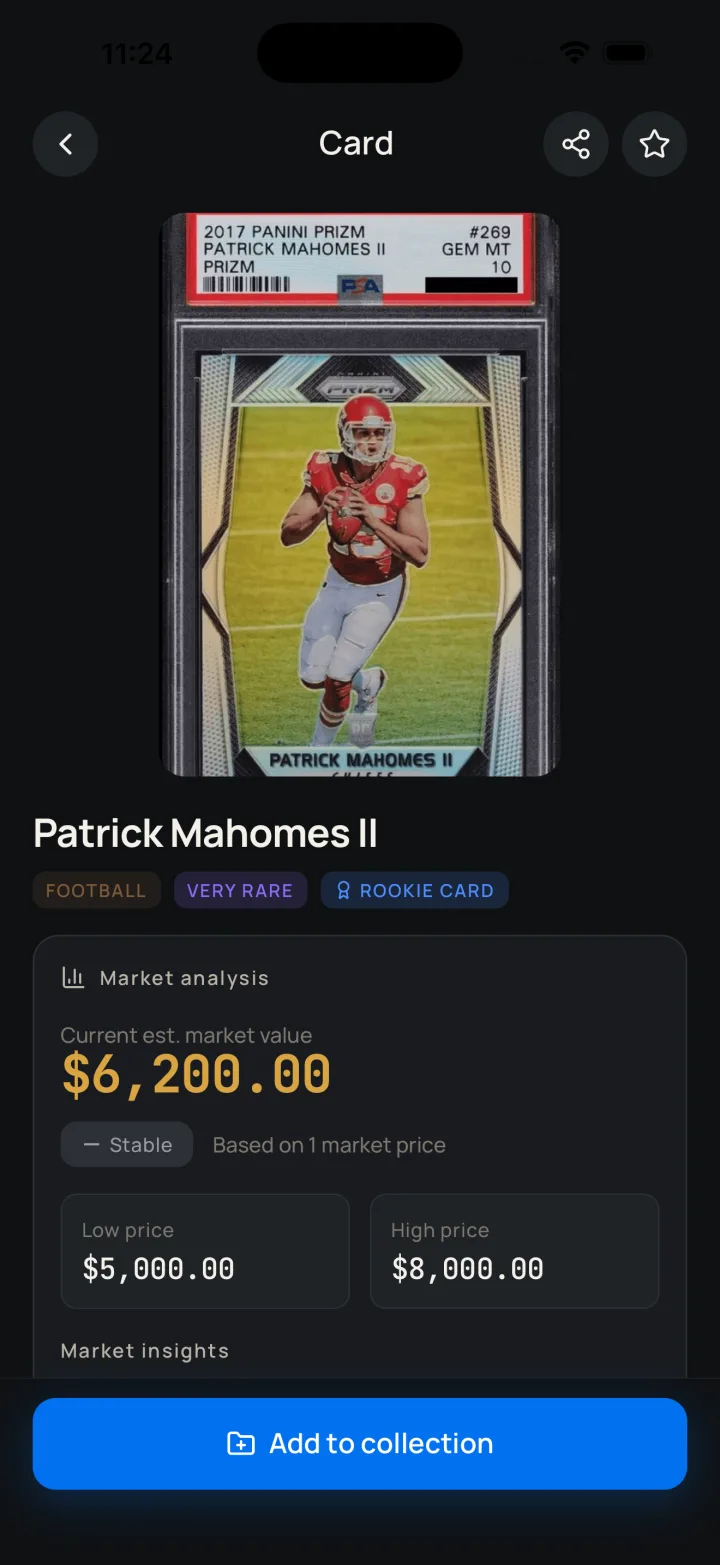
Card Identifier
Scan with the camera or pick a photo you already have. Slabbr reads the player, sport, year, brand, set, card number, team, variation and serial numbering, flags rookie cards, and notes any grade on the slab.
Market Value
Every card gets an estimated value with a low and high range, a rising, falling or stable trend, and a count of the prices behind it. Refresh any card to re-price it against the latest sales.
What else it does
Recent Sales
See the sold prices and price-guide entries the estimate is built on, matched to the same card, grade and parallel. Open any listing and check it yourself - no black box.
Graded Value Estimate
Compare what a card might fetch raw against PSA 8, PSA 9 and PSA 10, estimated from recent graded sales, so you can judge whether grading is worth the fee. Slabbr does not grade or authenticate.
Price History
Refresh a card over time and Slabbr charts every valuation, with the change since your first scan.
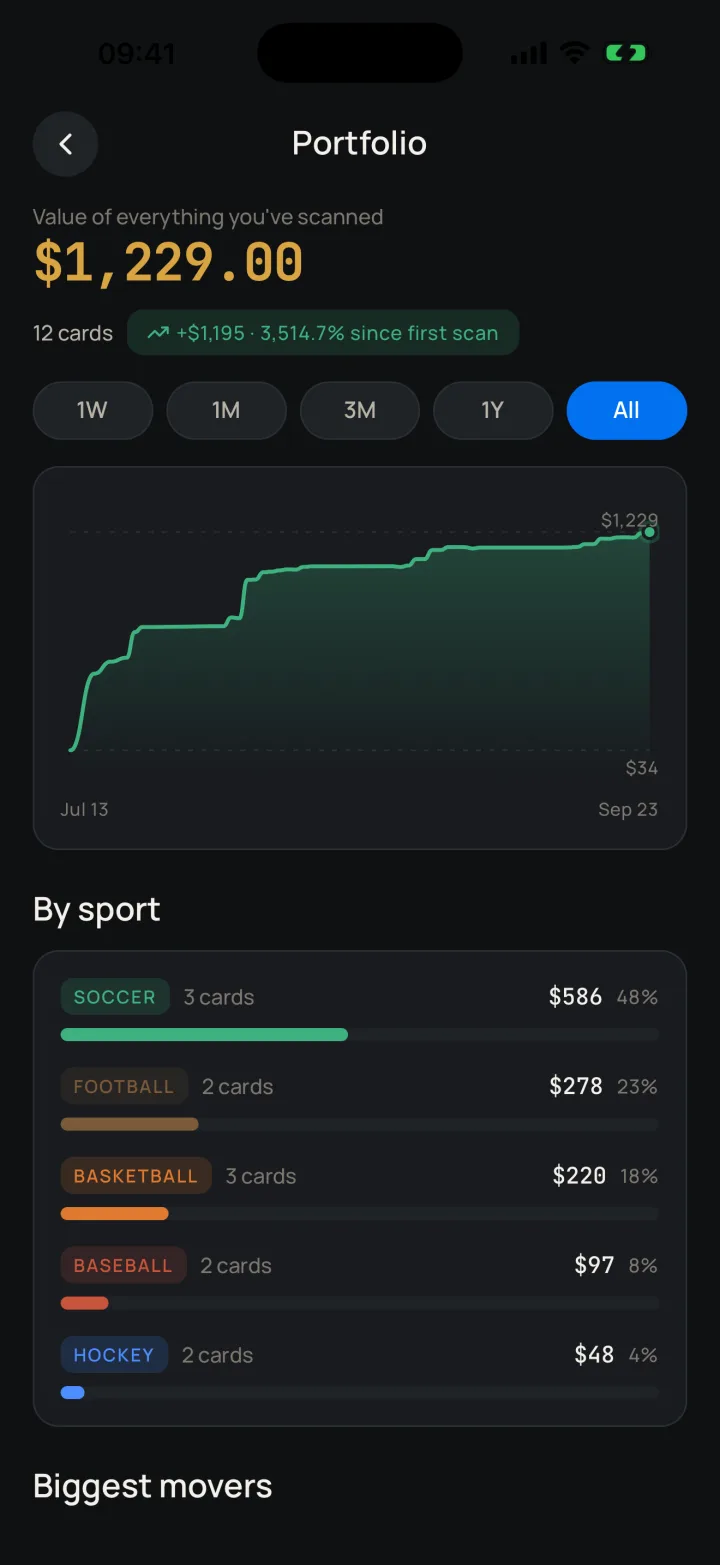
Portfolio
Track what your whole collection is worth, how it has moved, your biggest movers, and how the value splits across sports.
Collections
Sort cards into your own collections, mark favourites, order by value or date, and keep the scanned image with every entry.
Bulk Scan
Work through a box, a binder or a whole lot one card after another, without stopping to review each one.
Export
Export any collection to CSV or PDF, with player, set, number, condition, value and range - for insurance, a sale listing or your own records.
How It Works
1. Point your camera at the front of a card, and the back if you want 2. Slabbr identifies the player, set, year, number and parallel 3. See an estimated value and the sales it is based on 4. Save the card to a collection in one tap 5. Refresh any time to track price history and portfolio
Subscription
Slabbr is free to download and includes 5 card scans, market values, recent sales and your collection. Slabbr Pro is an auto-renewing subscription - weekly, monthly or yearly - that unlocks unlimited scans, full price history, bulk scan, and CSV and PDF export. The price, and any free trial, are shown in the app before purchase. It renews unless auto-renew is turned off at least 24 hours before the period ends, and can be cancelled any time in your account settings.
Questions
How can I identify a sports card from a photo?
Slabbr identifies cards from a photo or live camera scan. It reads the player, sport, year, brand, set, card number, team, variation and serial numbering, flags rookie cards, and notes any grade shown on a slab. The identifier keeps the scanned image with the entry so the card details stay attached to the record.
How does Slabbr estimate a card's market value?
Slabbr provides an estimated market value presented as a range and indicates whether the trend is rising, falling or stable. You can refresh any card to re-price it against the latest sales, and the valuation view links to the sales that underlie the estimate so you can inspect the entries used to build that range.
Can I see the actual sales that back a card's price?
Slabbr shows the sold prices and price-guide entries the estimate is built on, matched to the same card, grade and parallel. Open any listing to inspect the original sale or guide entry and review the details yourself; the recent sales view exposes the underlying listings rather than hiding the sources.
How can I manage lots of cards and export my collection with Slabbr?
Slabbr helps you manage many cards with portfolio and collection tools. Track overall collection value and movement, see biggest movers and how value splits across sports, sort cards into collections, mark favourites and keep the scanned image with every entry. Work through a box or binder with bulk scan, and export any collection to CSV or PDF with player, set, card number, condition, value and range.
Guides
- Does a COA guarantee a trading card is authentic
- How is a card grade determined
- How many basketball cards in 1986-87 set
- How many cards are in the 1952 baseball set
- How many millimeters is a standard trading card
- How should a collector catalog their cards
- How to identify basketball rookie cards
- How to pack a graded PSA card for shipping
- How to read card grade numbers
- How to ship trading cards safely
- How to verify trading cards authenticity
- What are the four things graders check on a trading card
- What do PSA card grades mean
- What does a 1 of 1 serial number mean on a trading card
- What does COA mean on a trading card
- What does parallel mean on football cards
- What does PSA 10 Gem Mint mean
- What does PSA 9 Mint mean on a graded card
- What does RC mean on a trading card
- What is a numbered parallel trading card
- What is a rookie card in trading cards
- What is the size of modern trading cards
Get instant sports card valuations
Point your camera at any sports card to identify player, set, year, card number and parallel, then see estimated values, recent sales and track collections.